学会参加報告:日本脊髄機能診断学会・第10回術中モニタリング研究会・AOSIN 2025 に参加して
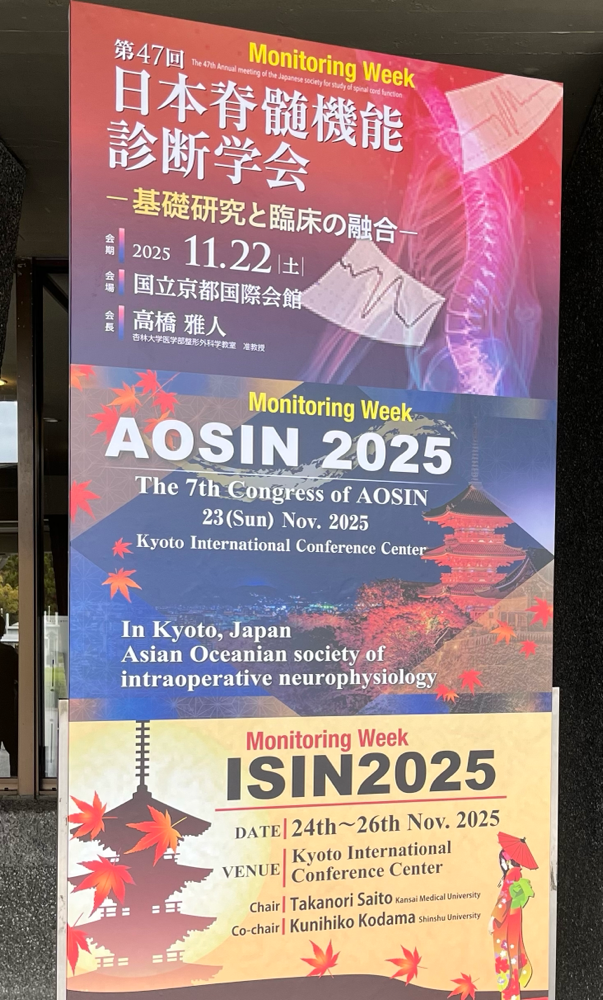
2025年11月、京都において
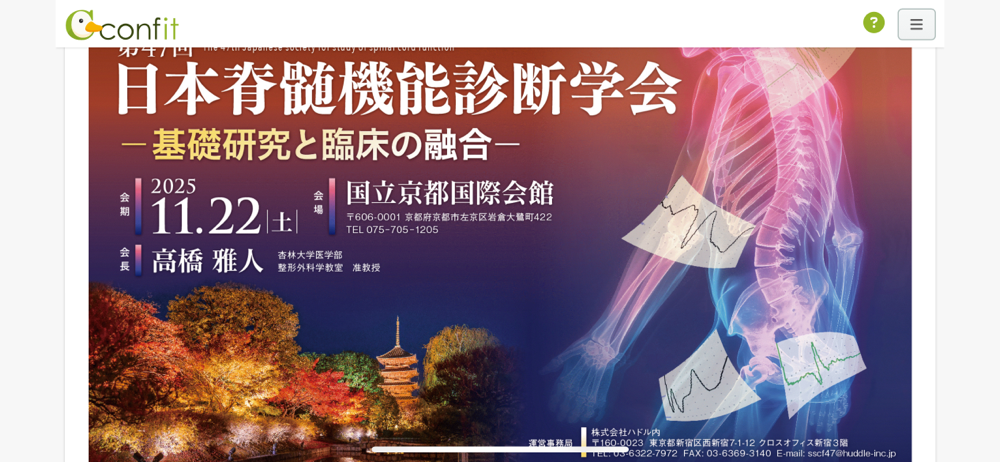
• 第47回 日本脊髄機能診断学会(11月22日)
• 第10回 日本脳脊髄術中モニタリング研究会(11月23日)
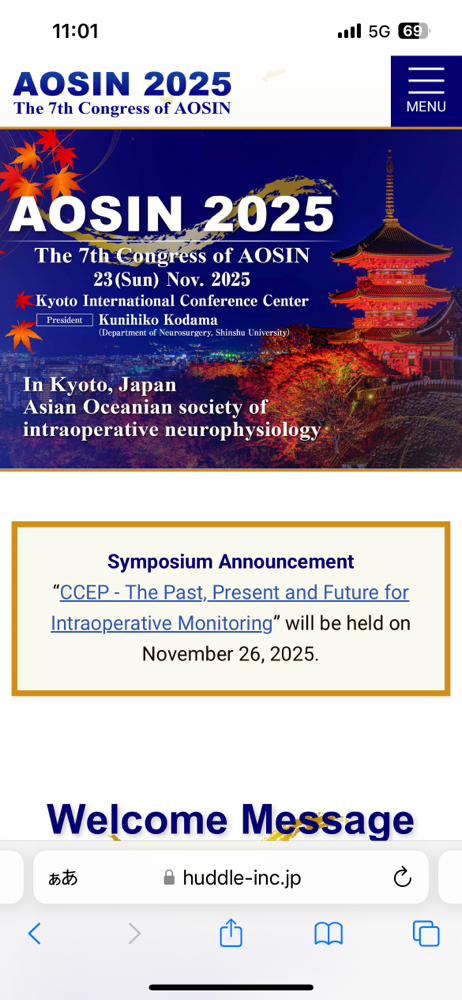
• AOSIN 2025(11月23〜26日)
が連続開催され、まさに “Spinal Neurophysiology Week” と呼ぶべき濃密な1週間となった。
脊髄機能、生理学、IONM、脊椎脊髄外科が一体となり、国内外の専門家と議論する貴重な機会であった。
⸻
第47回 日本脊髄機能診断学会
「基礎研究と臨床の融合」をテーマに、SEP、MEP、D-wave、BCR、脊髄血流評価などが議論され、術中モニタリング研究会への導入として最適な内容であった。
⸻
第10回 日本脳脊髄術中モニタリング研究会
テーマは
「術中臨床神経生理学的モニタリングの精度向上に向けて ― 私からの提言 ―」
Tc-MEP fade 対策、D-wave の扱い、刺激・麻酔条件、施設間差の調整など、現場で直面する課題を多職種で共有した。
私は脊髄髄内腫瘍手術におけるモニタリング戦略を発表し、D-wave 中心の判断や DWIONM の運用について提言した。
幸原伸夫先生による特別講演
「わたしたちは生体の中の何を記録しているのか?」
はIONMの本質を再考させる内容であった。
⸻
AOSIN 2025 – Session 3 Spine
Session 3 Spine では以下の講演を行った。
「Surgical treatment of intramedullary tumors utilizing intraoperative neuromonitoring」
Tc-MEP、D-wave、SEP を組み合わせた戦略、PM sulcus/DREZ approach の signal interpretation、DWIONM の応用などについて示した。
国際的視点からの質問も多く、非常に活発な討議となった。
⸻
総括
この京都での連続学会は、脊髄機能評価、臨床神経生理学、術中モニタリングの国際的潮流を一度に俯瞰できる貴重な機会となった。
得られた知見を臨床・研究・教育に還元し、今後の脊髄手術の発展に生かしていきたい。
Conference Report: Participation in the Japanese Society for Spinal Cord Function, the 10th JSSI Intraoperative Monitoring Meeting, and AOSIN 2025
In November 2025, I participated in three academic meetings held consecutively in Kyoto:
• The 47th Japanese Society for Study of Spinal Cord Function (Nov 22)
• The 10th Japan Society for Spinal Intraoperative Neuromonitoring (Nov 23)
• AOSIN 2025 – The 7th Congress of the Asian Oceanian Society of Intraoperative Neurophysiology (Nov 23–26)
This unique sequence of meetings created an exceptional “Spinal Neurophysiology Week,” bringing together experts in spinal cord function, clinical neurophysiology, IONM, and spinal surgery from Japan and abroad.
⸻
The 47th Japanese Society for Study of Spinal Cord Function
The week began with the 47th Japanese Society for Study of Spinal Cord Function, held at the Kyoto International Conference Center under the theme “Integration of Basic Research and Clinical Practice.”
A wide range of topics was covered, including somatosensory and motor evoked potentials, D-wave physiology, bulbocavernosus reflex, cervical myelopathy mechanisms, and spinal cord blood flow evaluation. The meeting provided an excellent opportunity to re-examine how basic electrophysiology and imaging principles relate directly to surgical decision-making.
This served as an ideal introduction to the following day’s focused program on intraoperative neuromonitoring.
⸻
The 10th Japan Society for Spinal Intraoperative Neuromonitoring
The next day, the 10th JSSI Intraoperative Monitoring Meeting was held, marking the 10th anniversary of the society. This year was especially significant because it was organized consecutively with AOSIN and ISIN, all in Kyoto.
The theme of the meeting was:
“Advancing the Accuracy of Intraoperative Clinical Neurophysiology — My Proposal”
The sessions brought together neurophysiology technologists, clinical engineers, orthopedic surgeons, neurosurgeons, and anesthesiologists.
Discussions focused on highly practical issues, such as:
• Tc-MEP fade management
• Interpretation of D-wave changes
• Standardization of monitoring settings across institutions
• Optimization of stimulation and anesthesia conditions
• Training and development of monitoring teams
I presented on intraoperative neuromonitoring strategies for intramedullary spinal cord tumor surgery, emphasizing D-wave–centered interpretation, signal changes during PM sulcus and DREZ approaches, and the clinical value of DWIONM.
The special lecture by Dr. Nobuo Kohara, titled
“What exactly are we recording from the human body? — Fundamentals of Clinical Neurophysiology”,
was particularly insightful and encouraged reflection on the foundational principles underlying IONM.
⸻
AOSIN 2025 – Session 3 Spine
Continuing at the Kyoto International Conference Center, AOSIN 2025 brought together international specialists in intraoperative neurophysiology.
I delivered the following lecture in Session 3 Spine:
“Surgical treatment of intramedullary tumors utilizing intraoperative neuromonitoring”
I presented my current approach to multimodal monitoring—Tc-MEP, D-wave, and SEP—including:
• Selection of surgical corridors for intramedullary tumor resection
• Interpretation of D-wave during real-time decision-making
• Troubleshooting Tc-MEP changes
• Utilization of Direct Wave Intraoperative Neuromonitoring (DWIONM)
The audience raised many questions regarding monitoring thresholds, fade phenomena, and differences between cervical and thoracic surgeries, leading to rich international discussion.
⸻
Conclusion
The consecutive meetings in Kyoto allowed for a comprehensive overview of spinal cord physiology, clinical neurophysiology, and the current international landscape of intraoperative neuromonitoring.
For spinal cord tumor surgery and vascular lesions, the integration of anatomy, neurophysiology, and surgical strategy is increasingly essential. The insights gained from this intensive week will directly contribute to my future clinical practice, research, and educational activities.
I look forward to continued collaboration with colleagues in Japan and around the world.